Loneliness in elderly parents: practical ways to help, from near or far
You call on Sunday, she says everything is fine, and you hang up with a knot in your stomach. Loneliness rarely announces itself. Here are things families can actually do, most of them without any technology.
Updated November 22, 2026
Signs worth noticing
Living alone is not the same as being lonely, and some people enjoy their own company. What matters is change. Things families often notice:
- She no longer mentions friends or neighbours by name
- Outings she used to enjoy are dropped “because it is too much trouble”
- The television is on all day
- Meals become irregular, or the fridge is nearly empty
- Calls get shorter, or much longer, with the same stories
If you see lasting sadness, weight loss, or a loss of interest in everything, talk to her doctor. This guide is not medical advice.
1. Make contact regular rather than long
A five-minute call every morning often does more than an hour on Sunday. A fixed time gives the day a shape and something to look forward to. Share the days among siblings and grandchildren, so that it does not rest on one person.
Post still works. A postcard, a child's drawing or a printed photo can be held, shown to a neighbour and stuck on the fridge.
2. Give them a role
People feel less alone when they are needed. Ask for the recipe and cook it together on the phone. Ask for advice about the garden. Have a grandchild interview them about their childhood for a school project. Ask them to keep a family tradition going: the birthday calls, the Christmas cards.
3. Rebuild ties close to home
You cannot be the whole social life of a parent, least of all from far away.
- Introduce yourself to one or two neighbours and exchange phone numbers
- Look at what the local senior center offers: lunches, cards, gentle exercise, outings
- Ask your local Area Agency on Aging about friendly visitor programs, shared meals and transportation
- Consider a faith community, a choir, a library group or volunteering, depending on their tastes
- A regular home helper, a hairdresser who visits or a meal delivery brings a familiar face several times a week
Go with them the first time. Walking alone into a room full of strangers is hard at any age.
4. Remove the hidden obstacles
Some isolation has a practical cause. Someone who hears poorly often avoids the telephone and group conversations. Poor eyesight, fear of falling or no longer driving shrink a life just as much.
- Have hearing and eyesight checked, and make sure hearing aids are actually worn and working
- Sort out transportation: a ride service, a neighbour, a standing taxi booking for the weekly outing
- Check the phone itself: is it charged, loud enough, simple enough to use?
5. See each other, not just hear each other
A face tells you more than a voice. You see whether she has dressed, whether she is smiling, what is on the table. And she sees the grandchildren grow.
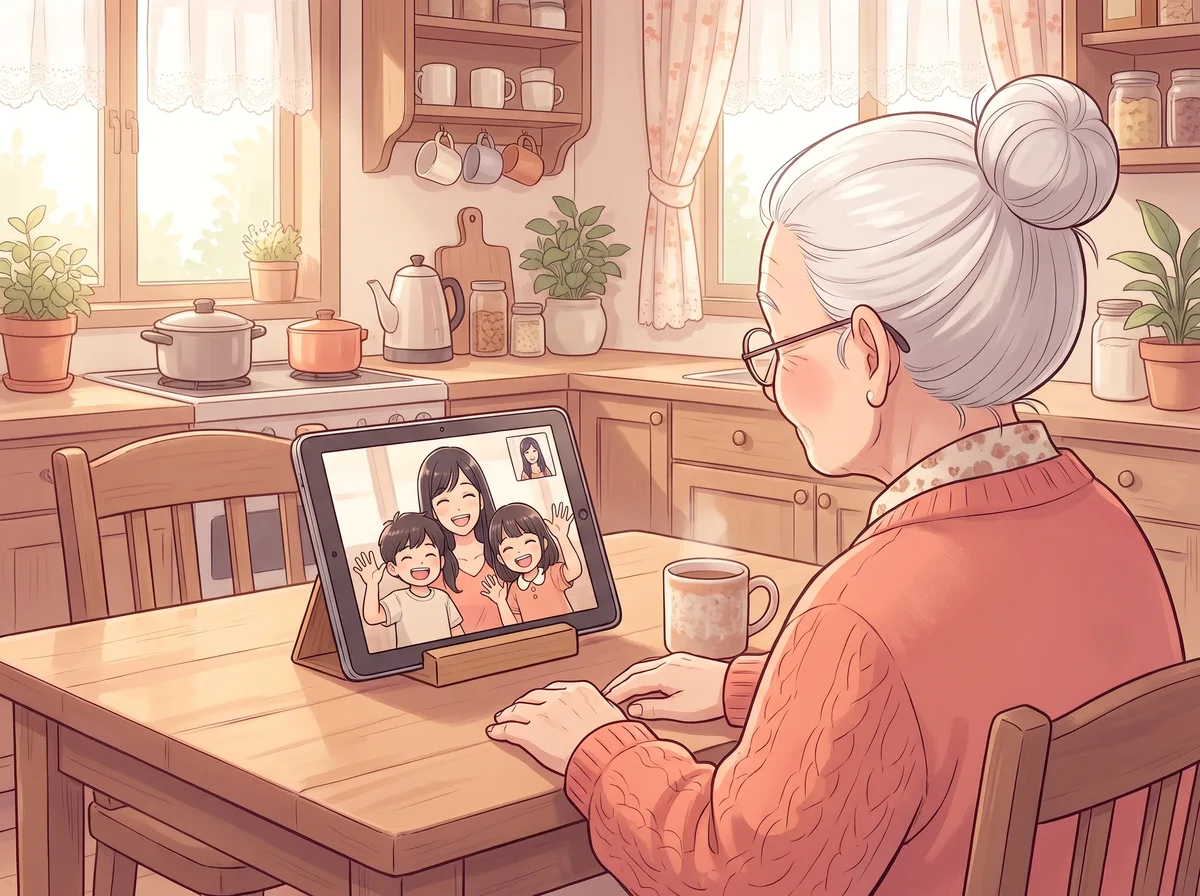
Video calls often fail with older people because regular apps ask for too much. That is the problem we built GrandmaCall for. It turns a tablet you already own into a video phone with one screen: she touches a face to call, and calls from trusted family members can open by themselves after a few rings. Between calls the tablet shows family photos. It is not yet available, and it is only one tool among the others on this page. See video calling for seniors and a photo frame for grandparents.
6. Plan the next visit before the current one ends
A date on the calendar shortens the weeks before it. Before you leave, write the next visit on the calendar in the kitchen. Between visits, small rituals keep the thread: the same TV show watched in two homes and discussed afterwards, a crossword done together on the phone.
How to start this week
Choose one fixed moment
Pick a time for a short daily or weekly call and keep to it for a month.
Find one local contact
A neighbour, a senior center, a helper: one name and one phone number.
Fix one obstacle
Hearing, transportation or the phone itself. Start with whichever blocks the most.
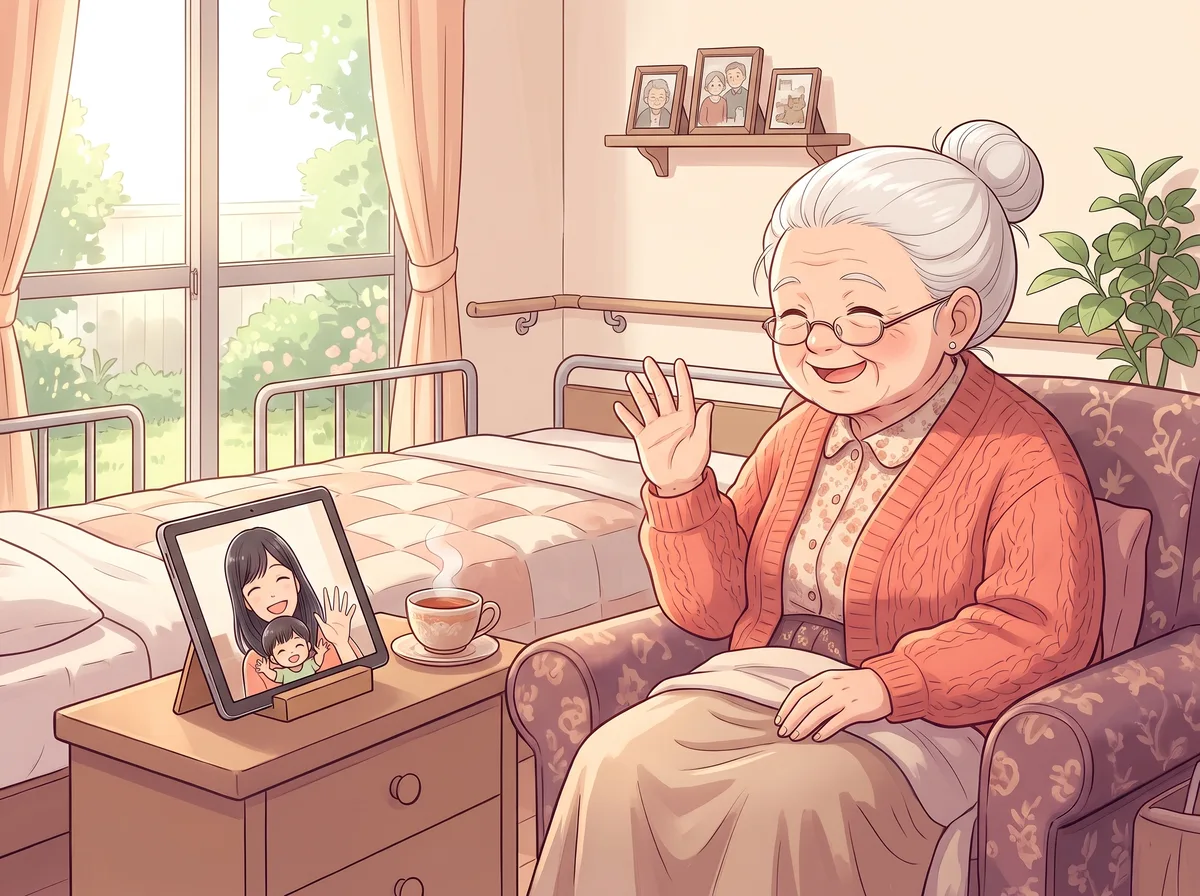
If your parent lives in a facility, the same ideas apply, with a few differences covered in video calls with a parent in a care home.
Common questions
How often should I call an elderly parent?
There is no rule. A regular rhythm matters more than the length: short and often usually beats long and rare. Ask your parent what they would like, and share the calls among the family.
My parent says everything is fine. Should I worry?
Many parents do not want to be a burden. Look at changes in habits rather than words: outings dropped, meals skipped, friends no longer mentioned. If in doubt, a visit or a word with a neighbour tells you more than a call.
My parent refuses anything with a screen. What can I do?
Start without screens: regular phone calls, post, neighbours, local activities. If you try video later, choose something with nothing to learn, and present it as a way to see the grandchildren rather than as technology.
I live far away. What can I really do?
A lot: regular short calls, post, organising local contacts and transportation by phone, and planning visits ahead. Distance limits presence, not attention.